
Preparing to sell your home can be an emotional process – and we’re here to ensure you get the most out of your investment once you’re ready to list.

Preparing Your Home for Professional Listing Photos: Your Ultimate Checklist

When you’re selling your home, photos are often the first view a prospective buyer sees. Strong listing photos can help your home stand out, highlight its best features and encourage more buyers to schedule a showing.

That doesn’t mean your home needs to look like a magazine spread. It means buyers should be able to clearly see the space, understand how each room functions and picture themselves living there.

A little preparation before photo day can make a big difference. Run through this checklist to ensure you’re putting your best foot forward in list photos.

1. Start With a Deep Clean

Cameras notice the details. Dust on shelves, streaks on mirrors, crumbs on counters and smudges on appliances can all show up in photos. Before your photo appointment, focus on the areas buyers will study most closely:

  • Kitchens
  • Bathrooms
  • Floors
  • Windows
  • Entryways

More specifically, you should wipe down counters, polish faucets, clean appliances, sweep porches and vacuum carpets. If you have the time and budget, this may be a good moment to bring in a professional cleaner.

Even if your home is already tidy, photo prep requires a slightly different eye. The goal is to make every room feel fresh, cared for and ready for a buyer to imagine as their own.

2. Declutter Every Room

Clutter can make a home feel smaller in photos. It can also distract buyers from the features you want them to notice, like natural light, hardwood floors, built-ins or updated finishes.

Start with flat surfaces. Clear kitchen counters, bathroom vanities, nightstands, desks and coffee tables. A few simple items can stay, such as a couple plants, a bowl of fruit or neatly arranged towels, but less is usually better.

Pay attention to everyday items, too. Put away mail, cords, remotes, pet bowls, laundry baskets, trash cans, toiletries, cleaning supplies and kids’ toys. These things are part of real life, but they do not need to be part of your listing photos.

Closets may also be photographed, especially if storage is a selling point. Straighten shelves, remove items from the floor and consider packing away anything you do not need while your home is on the market.

3. Depersonalize the Space

Buyers want to picture their future in the home. Personal photos, name signs, school items, diplomas and other highly specific décor can make that harder.

You don’t need to strip the home of all character; a warm, welcoming space photographs better than a bare one. The goal is to create a neutral starting point: replace personal items with simple décor, artwork, plants or books. Keep the focus on the home itself.

This is also a good time to remove anything that could distract buyers, including political signs, valuables, prescription medications or private documents.

4. Think About the Camera, Not Daily Life

A room that works well in person may need small adjustments for photos. Furniture might need to shift slightly. A rug may need to be straightened. Dining chairs may need to be evenly spaced. Bedding may need to be steamed or smoothed.

Walk through each room and take a photo with your phone. Look at the image, not just the room. Do you notice clutter? Shadows? Crooked frames? Too much furniture? A distracting view through the window?

This quick test can help you see what the camera sees.

5. Let in the Light

Good lighting helps rooms feel open and inviting. Before the photographer arrives, open curtains and blinds, raise shades and make sure windows are clean.

Turn on interior lights, including lamps, under-cabinet lighting and accent lights, and replace burned-out bulbs.

Pro Tip: Try to keep bulbs in the same room consistent in color. A mix of bright white, soft white and yellow bulbs can look uneven in photos.

Your REALTOR® and photographer can also help determine the best time of day for photos based on how sunlight moves through your home. In some homes, morning light works best. In others, afternoon light may be better.

6. Make Small Spaces Feel Open

Chicago homes come in all shapes and sizes, from condos and bungalows to two-flats and townhomes. If you are preparing a smaller room, the right photo prep can help buyers understand the space.

Remove extra furniture, clear floors and keep walkways open. Use simple bedding and lighter colors when possible. Make sure curtains are open and lamps are on. In bathrooms, remove most countertop items and use clean towels to give the room a fresh look.

Buyers do not need every room to be large. They need to see how the space can work.

7. Highlight the Home’s Best Features

Every home has something worth showing off. It might be a fireplace, original woodwork, skyline view, updated kitchen, private balcony, backyard, finished basement or sunny breakfast nook.

Before photo day, ask your REALTOR® which features should receive extra attention. They understand what buyers in your area are looking for and how your home compares with similar listings.

Once you know what matters most, make sure those features are visible. Take these simple steps into consideration when preparing your space for photos:

  • Open doors to patios or balconies when appropriate
  • Clear items away from fireplaces
  • Remove objects blocking windows
  • Keep countertops clear around upgraded appliances or finishes

8. Don’t Forget the Exterior

The outside of your home is part of the buyer’s first impression. Even if most of the photo prep happens inside, give the exterior some attention, too.

Sweep the front steps, tidy the porch, remove trash bins, coil hoses, clear walkways and touch up landscaping where you can. In the city, this may also mean cleaning up the area near gates, garages, gangways or parking spaces.

For condos, you may have less control over the full building exterior, but you can still make sure your entry, balcony or private outdoor space looks clean and inviting.

9. Create a Photo Day Checklist

The final hour before photos can feel rushed, so make a checklist ahead of time. Before the photographer arrives:

  • Open curtains and blinds
  • Turn on all lights
  • Close toilet lids
  • Put away trash cans
  • Clear counters
  • Make beds
  • Hide cords and chargers
  • Remove cars from the driveway or front of the home, when possible
  • Put away pet items
  • Check mirrors for reflections
  • Do one final walk-through

Work With a REALTOR® Before You Get Started

Preparing for listing photos is not only about making your home look nice — it’s part of your overall selling strategy.

A REALTOR® can help you decide what to clean, what to store, what to repair and what to leave alone. They can also connect you with trusted photographers, stagers, cleaners and other professionals who understand how to prepare a home for market.

This guidance can be especially helpful in Chicago, where buyers may be comparing different property types, neighborhoods, building styles and price points. The right preparation helps your home make a strong first impression online and supports the rest of your selling plan.

The Bottom Line

Professional photos help buyers see your home clearly. Your job before photo day is to make the space feel clean, open and easy to understand.

Pack away what you can. Let in the light. Focus on the features that make your home special. Then, lean on your REALTOR® for advice on how to present your property in a way that connects with today’s buyers.

This checklist can help your home show its best from the very first click.

Home Staging Tips Every Seller Should Know

First impressions matter, especially in real estate. When buyers walk into a home, they aren’t just evaluating square footage or finishes. They’re imagining their future. Effective home staging helps create that emotional connection, making your listing more appealing and more competitive in today’s market.

Staging doesn’t have to be expensive or overwhelming. With the right strategy (and the guidance of a trusted REALTOR®), you can highlight your home’s best features and help buyers see its full potential. Here’s how to get started.

1. Start With a Deep Clean

Before anything else, a spotless home sets the tone for buyers. Focus on:

  • Kitchens and bathrooms
  • Windows and lighting fixtures
  • Floors, carpet and baseboards
  • High-touch surfaces

A clean home shows buyers that the property has been well cared for.

2. Declutter and Depersonalize

Less is more when it comes to staging. Removing excess items helps your home feel larger, brighter and more open.

What to remove:

  • Personal photos and sentimental items
  • Bulky furniture that crowds a room
  • Excess décor
  • Items stored on countertops or tabletops

Your goal is to create a neutral, welcoming space where buyers can picture themselves living, not feel like they’re walking through someone else’s home.

3. Rearrange Furniture

Thoughtful furniture placement can make a room look bigger and improve the flow of your home.

  • Pull furniture away from the walls to create conversation areas
  • Remove extra pieces that block walkways
  • Highlight focal points like fireplaces or big windows

Your REALTOR® can help you decide what stays and what should be removed or repositioned.

4. Boost Curb Appeal

Buyers start forming opinions before they ever step inside. A few small updates can go a long way:

  • Tidy landscaping and trim shrubs
  • Sweep porches and walkways
  • Add a fresh doormat or seasonal planter
  • Repaint or clean the front door

In Chicago, curb appeal matters even in colder months. Clear sidewalks, add lighting and make your entry feel warm and welcoming.

5. Let The Light In

Bright spaces feel larger and more inviting.

  • Open blinds and curtains
  • Replace dim bulbs
  • Add lamps to darker corners
  • Choose warm, neutral lighting where possible

Lighting upgrades are an inexpensive way to elevate the look and feel of your home.

6. Refresh With Simple Updates

You don’t need a full remodel to make a big impact. Consider:

  • Fresh paint in soft, neutral tones
  • Updated hardware on cabinets
  • New throw pillows, bedding or towels
  • Modern, minimal décor

These small touches help buyers see your home as move-in ready, which is a big advantage in any market.

7. Create Purpose In Every Room

Show buyers how each space can be used.

  • Turn an awkward nook into a reading area
  • Stage a spare bedroom as a home office
  • Set a simple dining table to show how the space flows

Buyers often have trouble visualizing possibilities. Staging helps them imagine a lifestyle, not just a floor plan.

8. Prepare For Showings And Open Houses

Once your home is staged, keep it showing-ready with a few quick habits:

  • Take out the trash each morning
  • Hide daily-use items in baskets or bins
  • Give surfaces a fast wipe-down
  • Open blinds and turn on lights before you leave

Your REALTOR® will help coordinate showing schedules and share feedback so you can keep fine-tuning your space.

9. Work With A REALTOR® For Expert Staging Guidance

Chicago REALTORS® understand what local buyers look for, including what features matter in different neighborhoods and price points. Your REALTOR® can offer personalized recommendations, connect you with professional stagers or photographers and help position your home to stand out online and in person.

Staging isn’t just about décor; it’s a strategic tool that can help your home sell faster and for a stronger price.

Final Thoughts

A well-staged home creates an inviting atmosphere that helps buyers instantly feel connected to your space. With a little planning, as well as the insight of a trusted real estate professional, you’ll be ready to make a strong first impression and move confidently into your next chapter.

7 Steps to Prepare Your Home to Sell

Selling your home is not always a straightforward process. Sometimes, it can be complex and time-consuming, but understanding the steps to successfully sell a home will ease your stress. By knowing how to get your house selling ready, you can make sure that your home is selling at the price you want and ensure the process go smoothly. Here are some tips for getting your home ready to sell:   

Clean & Declutter

Before you start showing your home to potential buyers, it is important to give it a thorough cleaning and declutter as much as possible. Remove any personal items and excess clutter, and consider hiring a professional cleaning service to give your home a fresh, clean look.  

Make Necessary Repairs

Fix any broken or damaged items in your home, such as leaky faucets, broken windows or chipped paint. These small repairs can go a long way in making your home more appealing to potential buyers and increasing its value.  

Stage Your Home

Staging your home means making it look attractive and inviting to potential buyers. This can include rearranging furniture, adding decorations and making sure the home is well-lit and welcoming. Staging your home can help potential buyers visualize themselves living in the space. Consider hiring a professional stager or using your furniture and décor to create a cohesive and inviting look.  

Price It Right

Setting the right price for your home is crucial to selling it. When setting a price for your home, it is important to be realistic. You should consider factors such as the condition of your home, its location and comparable sales in the area. Research comparable homes in your area to get a sense of what your home is worth. Your REALTOR® will help you along this process, make suggestions and ensure you’re set up for success!

Market Your Home

In today’s market, it is important to use a variety of marketing strategies to get your home noticed. This can include listing your home on websites, as well as utilizing social media and other online platforms to highlight your home.  Also, your REALTOR® will have an arsenal of time-tested ways to ensure your house is being marketed to the right people, so make sure to utilize their skills.

Be Prepared for Showings

When potential buyers come to see your home, make sure it is ready for them. This means keeping it clean and tidy, turning on all the lights and having a good supply of fresh towels and linens for any potential buyers who may want to see the bathrooms.  

Be Flexible

The process of selling a home can be unpredictable, and you may need to be flexible to close the deal. This may mean being open to negotiations, making repairs or updates at the request of the buyer or adjusting your selling timeline.  

By following these tips, you can increase the appeal of your home and make it more attractive to potential buyers. Remember to be patient and keep an open mind as you navigate the process of selling your home.

three people looking at documents

Listing Agent: The Key to Finding the Right Person

Home is where the heart is, and if you’re ready to sell your current home, you want to make sure you’re putting your trust in the right hands. Your listing agent will work with you to price and market your home, negotiate with buyers and help with closing the deal.

Here’s how to find an expert that works with you and your needs.

Know Your Timeframe

Have a listing date in mind? Backtrack six to eight weeks before that time, and aim to hire a listing agent around that time.

This will give you both the time to prepare to go live with your listing. For you, that might mean making repairs or upgrades. For your agent, that means working on creating a polished listing, ideas for marketing the house, pricing and more.

Begin Your Search

As you approach that ideal time to hire a listing agent, start researching professionals.

You can search for a Chicago REALTOR® here, or ask friends and family for recommendations. Remember, it doesn’t hurt to shop around. You’ll be working side by side with your agent, so make sure you find someone your trust to do the job.

Conduct Interviews

Take the recommendations and research you’ve done to set up interviews with agents. Here are some suggested questions that will help you determine if an agent is the right fit for you:

  • How long have you been in the real estate business?
  • What’s the price range of the homes you typically sell?
  • What is your fee?
  • How do you market homes?
  • How long are your homes usually on the market?
  • What’s your communication style?

During these interviews, make sure the agents understand your goals and meet the expertise qualifications or personality you’re looking for. If you follow those two desires, you’ll be sure to find a listing agent that works for you!

Comparable Sale: What It Is & Why It Matters

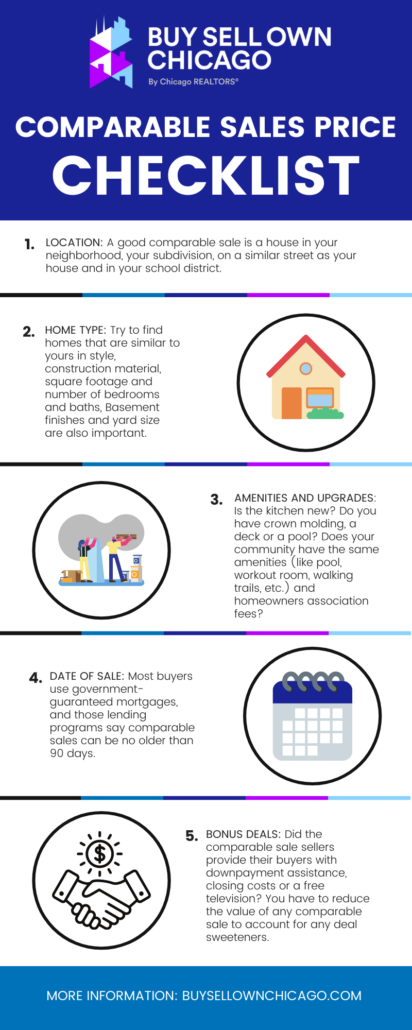
The burning question for anyone getting ready to sell their home is: “How much can I sell for?” First, it’s important to understand what a comparable sales price is and why it matters is valuable, which we’ve broken down for you below.

What Is A Good Comparable Sale Price:

comparable sales infographic

Why Does It Matter?

Evaluating the differences and similarities of surrounding properties on the market will give you the best idea of the current estimated value of your home. This is also where your REALTORS’® expertise will come into play, as they’ve likely seen many homes in your neighborhood and know about comparable sales in your area, making them your greatest asset in the listing process to help adjust your price efficiently and effectively.

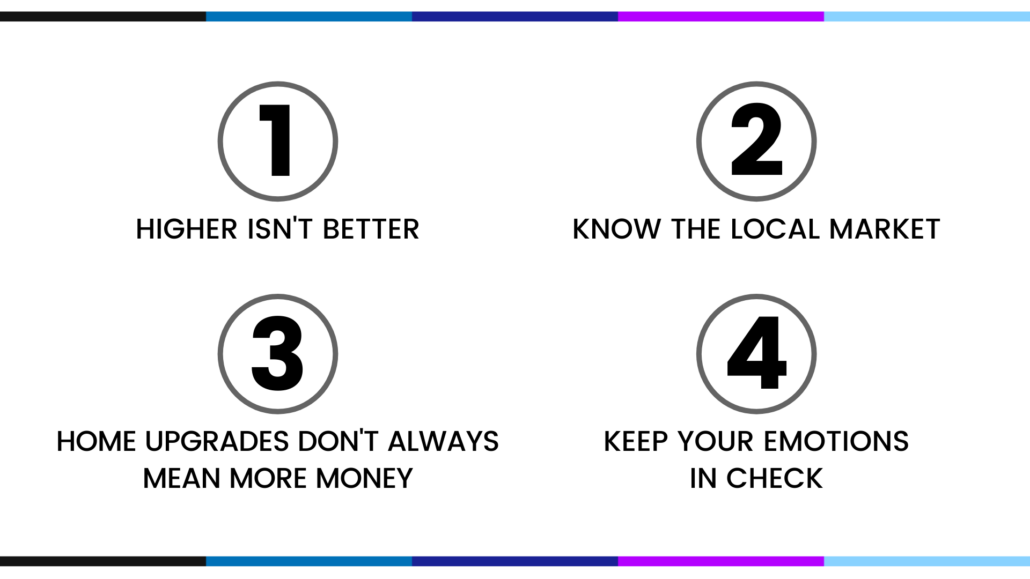
4 Ways to Price Your Home Like A Pro

Your home is a major investment in time, money and memories, so understandably, selling it can be an emotional process.

It’s important to lean on your REALTOR® for guidance. After all, this person is your go-to industry expert who is invested in helping you sell on your timeline and for the best possible ROI.

Still nervous about the pricing conversation? We’ve created four pro tips to help you through this process.

1. Higher Isn’t Always Better

Be strategic in your pricing and don’t list too high – that could scare away potential offers!

The longer your house sits on the market, the less likely you are to get your asking price. Buyers are more likely to negotiate a deal on a house that’s been listed for a significant stretch of time. A price-to-sell strategy will give you leverage, options and exposure to potential buyers.

2. Know The Local Market

How did similar homes in your neighborhood sell? These comparables (also called “comps”) play a big role in your own home’s price.

Your REALTOR® should run the average sale price for homes in your area. When selecting comps, REALTORS® generally filter properties within a one-mile radius of your home that sold in the past 90 days. Comparable homes will be similar in age, location, square footage and number of bedrooms/bathrooms.

Based on these results, they’ll pinpoint the differences and assess why price reductions did or didn’t happen. This nuanced understanding is invaluable, particularly when measuring the unique aspects of your home.

3. Upgrades Don’t Always Mean More Money

Buyers want a home they can:

  1. Picture themselves in, and;
  2. Easily make their own.

Help spark their imagination with neutral updates. Upgrades based on specific taste can sometimes devalue a home based on personal buyer taste and preference.

For example, just because you spent $40,000 to update your kitchen doesn’t mean you get to add an extra $40,000 to the listing price. Research from the National Association of REALTORS® states you might recoup 59% of your costs, based on the national average of kitchen upgrades.

Talk to your REALTOR® about what you can do, or have done, that positively affects your home value and listing price.

4. Keep Your Emotions in Check

Don’t let pride, sentiment and nostalgia mislead you!

According to the National Association of REALTORS®, the wrong price can drastically delay your sale. That “fresh factor” tends to wane after just 30 days! Therefore, it’s important to listen to your REALTOR® about your pricing strategy.

Their unbiased perspective combined with knowledge of the market and real estate inventory will help you walk away from the closing table feeling confident in your transaction.

ramp up your curbside appeal

How to Ramp Up Your Curbside Appeal

Are you thinking of putting your home on the market? If so, ask yourself two questions from a buyer’s perspective. First: what would stop you from making an offer? Second: what makes this home stand out from a curbside view?

There are many important steps to preparing your home to sell. Curbside appeal projects provide sellers like you with the highest return on investment. Therefore, we recommend focusing on these 5 projects to ramp up those beautiful, exterior home aesthetics!

Update Your Curb Appeal

The National Association of REALTORS® “Remodeling Impact Report” suggests that landscaping projects often bring in higher sales prices. Homes that improved their landscaping or added a deck or patio, saw returns of investments above 100%.

We recommend starting with:

  • Applying a fresh coat of paint to the front door.
  • Trimming your bushes and other greenery.
  • Re-mulching those garden beds.
  • Replacing worn-down stone walkways and pathways.
  • Removing any dead plants or trees.
  • Aerating the lawn (if you have one).
  • Pressure washing the exterior of your home, driveway and sidewalk.

In the end, any of these curbside appeal upgrades will help attract the eye of your home’s future residents!

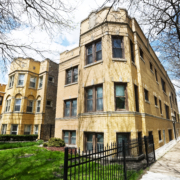
photo of Chicago residential building

FSBO vs. REALTOR®: How Should You Sell Your Home?

You’re ready to make the next move in your life to a new home, which brings up the task of selling your current house. You may be debating whether to sell the house on your own, For-Sale-By-Owner (FSBO), or to use a REALTOR®. You might think your best option is to sell it on your own, however, we argue that you might want to think twice about that decision. These are the top benefits and reasons you should use a REALTOR® to sell your home.

#1: REALTORS® Will Sell You Home For a Higher Price

Many sellers who choose the FSBO route believe they will be saving money in the long run by avoiding paying commission to a REALTOR®. According to the Nation Association of REALTORS’®(NAR) 2017 Profile of Homebuyers and Sellers, those who used a REALTOR® sold their home for between $60,000 to $90,000 more than FSBO. Even with commission costs, which are typically five to six percent of the home’s listing price, you will still be selling your home for more!

#2: REALTORS® Have the Time and Tools to Market Your Property

With a full-time job, family and other responsibilities, finding time for yourself can be hard, let alone finding the extra time to list and market your home. REALTORS® have the time (it’s their job!) and the resources (including dedicated property websites, built-in social media audiences, open house hosting experience and a broad network) to effectively spread the word on your home. Their expertise comes in handy for those who are unsure where to start when purchasing a home.

#3: Your Home Will Sell Faster When Working with a REALTOR®

Because of their access to time and tools to sell your home, using a REALTOR® will allow your home to sell faster. The NAR report found that most homes sold by REALTORS® were purchased 20 days faster than FSBO. If you’re on a timeline and need to sell quickly, getting these days back could mean a lot.

#4: REALTORS® Have Potential Buyers At Their Fingertips

How many people do you know who are looking to buy a home? REALTORS® have a full arsenal of potential homebuyers at their fingertips, from previous and current clients to those in their database and more. They have the ability to reach more people faster than an FSBO.

If you’re ready to get started with a REALTOR® to sell your home today, click here to begin your search.