
Your Guide to Cook County Property Taxes
If you own a home in Chicago or Cook County, or are planning to become a homeowner, property taxes are an unavoidable factor to keep in mind. While property taxes help fund important local services like schools, parks and public safety, the way they’re calculated and what appears on your tax bill can feel confusing.
Understanding the basics can help you plan your housing budget and spot potential issues on your tax bill.
What Do My Property Taxes Pay For?
Property taxes fund many of the services that keep communities running. In Cook County, your tax dollars support local government bodies such as:
- Public school districts
- Municipal services like police and fire departments
- Park districts
- Libraries
- Community colleges
- County services
Each of these taxing bodies sets a levy, or the amount of money they need to operate. Your individual tax bill reflects your share of those levies based on your property’s assessed value.
How Are Property Taxes Calculated?
Property taxes in Cook County are based on three main factors:
1. The Assessed Value of Your Property
The Cook County Assessor estimates the value of your property. Residential properties are assessed at 10% of their market value.
2. An Equalization Factor
The State of Illinois applies an equalization factor to ensure assessments across counties are consistent with state standards.
3. Local Tax Rates
Local taxing districts determine the tax rate needed to generate their budgets.
These components combine to determine your final tax bill.
What’s Included On A Property Tax Bill?
When your property tax bill arrives, it contains several key sections that explain how your taxes were calculated.
Some of the most important details include:
- Property Index Number (PIN): This is the unique number that identifies your property.
- Assessed Value: This is the value used to calculate your taxes.
- Exemptions: You may qualify for reductions that lower your taxable value.
- Taxing Districts: These are the local governments receiving portions of your tax payment.
- Installment Amounts: This is the amount due for the current installment.
In Cook County, property taxes are usually paid in two installments each year.
What Property Tax Exemptions Are Available?
Many homeowners qualify for exemptions that lower their property’s taxable value. Some of the most common include:
- Homeowner Exemption
- Senior Citizen Exemption
- Senior Freeze Exemption
- Disabled Persons Exemption
- Veterans with Disabilities Exemption
These exemptions reduce the portion of your home’s value that is taxed, which can significantly lower your bill. More details on these exemptions can be found here.
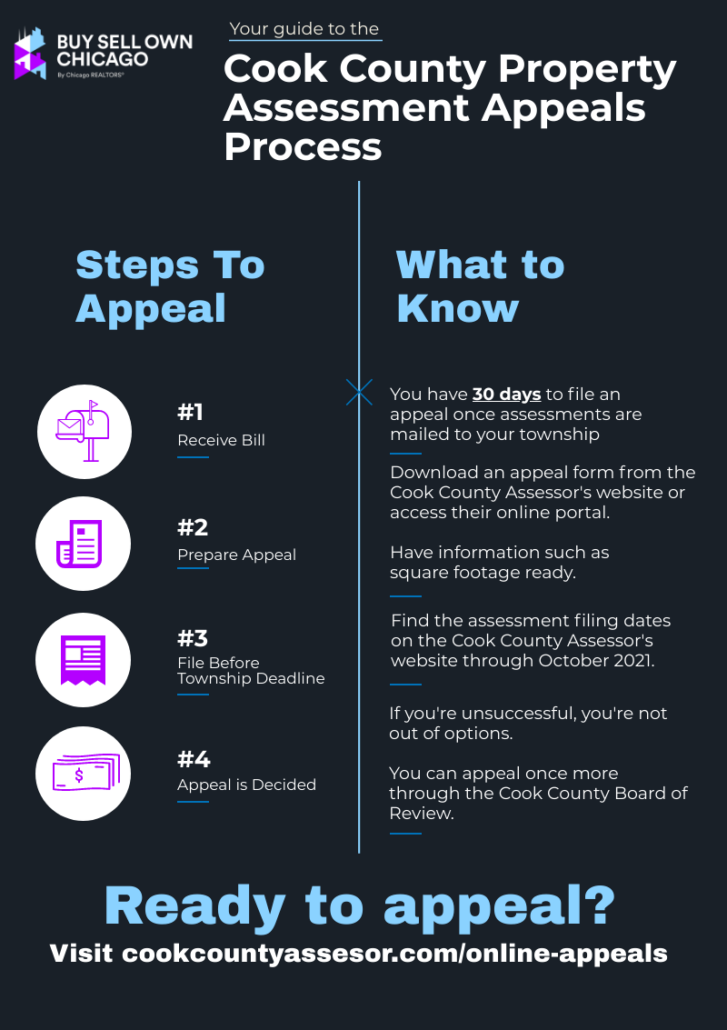
What If Something Looks Wrong?
If your property tax bill doesn’t seem accurate, there may be options to review or appeal it. Homeowners can:
- Verify that exemptions were applied correctly
- Confirm the assessed value of the property
- Review the taxing districts listed on the bill
Because property tax assessments and appeals can be complex, working with a knowledgeable professional can help homeowners better understand their options.
Why Do Property Taxes Matter When Buying A Home?
Property taxes can have a significant impact on the overall cost of homeownership. When considering a home purchase, buyers should factor taxes into their long-term budget.
A REALTOR® can help buyers:
- Research historical property tax levels
- Understand potential tax changes after a purchase
- Identify available exemptions
- Evaluate total housing costs before making an offer
The Bottom Line
Property taxes may seem complicated, but understanding how they work can make you a more confident homeowner. Reviewing your tax bill each year and knowing what affects your property taxes can help you plan ahead and avoid surprises.
If you’re buying or selling a home in Chicago, a REALTOR® can help you navigate property tax questions and make informed decisions about your next move.